
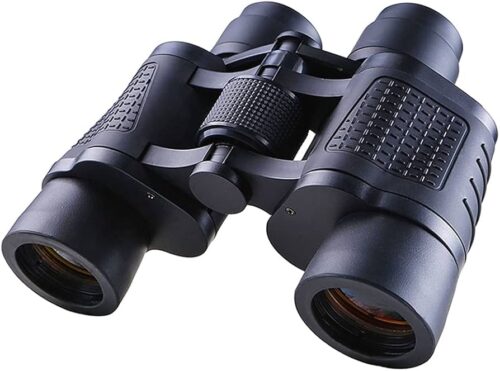
Looking for the best zoom binoculars to enhance your outdoor observation? If your answer is yes, then you are in the right place.
Zoom binoculars are designed with adjustable magnification that allows users to zoom in and out depending on how far away their subject is. They are versatile for a variety of outdoor activities, including wildlife observation, sporting events, sightseeing, and casual astronomy. In this guide, we will walk you through the top models available and help you choose the right pair for your needs.
What to Look for in the Best Zoom Binoculars
When choosing the best zoom binoculars, it’s important to understand these key features that will help you select a pair that delivers clear, stable, and enjoyable viewing.
1) Nikon ACULON A211 10-22×50 Binocular – Best Overall
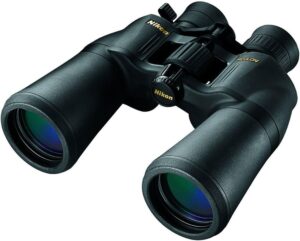
The Nikon ACULON A211 10-22×50 is the best zoom binocular. It is built with versatile use in mind for users who want flexibility without sacrificing optical quality.
Featuring Nikon’s well-known multilayer-coated lenses, it delivers bright and clear images across a wide range of magnifications. Furthermore, the 50mm objective lenses allow plenty of light to enter the optics, making these binoculars suitable for daytime observation and reasonably effective in low-light conditions such as dawn or dusk.
Regarding magnification, the adjustable 10–22x zoom range lets users quickly shift from wide-field viewing to closer, more detailed observation, which is especially helpful for activities like birdwatching, wildlife spotting, or viewing distant landscapes.
Comfort and durability are also key strengths of this model. The binoculars feature a rubber-armored body that provides a secure grip and helps protect the internal components from minor bumps during outdoor use.
Moreover, Nikon’s ergonomic design includes smooth central focusing and a fingertip zoom control that allows easy adjustments while viewing. The twist-up eyecups and generous eye relief further enhance glassing comfortable for extended viewing sessions, with or without eyeglasses.
Pros
- Wide 10–22x zoom range for flexible viewing
- Large 50mm objective lenses for bright, clear images
- Multicoated optics improve light transmission and image clarity
- Rubber-armored body for durability and a secure grip
- Smooth central focus and easy-to-use zoom lever
- Comfortable twist-up eyecups with good eye relief
Cons
- Heavier and bulkier than compact binoculars
- Not fully waterproof or fog-proof
2) Celestron SkyMaster 15-35×70 Zoom Binoculars – Best for Astronomy
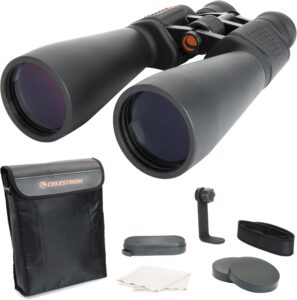
The Celestron SkyMaster 15-35×70 Zoom Binoculars are designed for users who want powerful magnification and large objective lenses for long-distance viewing and astronomy.
Featuring an adjustable 15–35x zoom range and large 70mm objective lenses, these binoculars gather significant amounts of light, making them effective for low-light conditions such as dusk wildlife observation or stargazing.
Furthermore, the multi-coated optics help enhance brightness and contrast, allowing users to view distant objects with improved clarity.
Regarding construction, the durable housing withstand abuse and repeated rough handling. Besides, the tripod-adaptable design is well suited for extended observation sessions where stability and comfort are essential.
In practical use, these binoculars deliver impressive reach and versatility for both terrestrial and celestial viewing. The zoom feature allows users to easily switch between wider views and more detailed close-ups of distant subjects, which is helpful when scanning landscapes or tracking moving wildlife. The large aperture also helps reveal details of the moon, star clusters, and other bright celestial objects.
Pros
- Powerful 15–35x zoom magnification for flexible viewing
- Large 70mm objective lenses for excellent light gathering
- Multi-coated optics enhance brightness and contrast
- Tripod adaptable for stable long-range observation
- Durable design suitable for outdoor use
Cons
-
Narrower field of view at maximum zoom
3) Opaita 12-36×52 Binoculars – Best for Cruise Ship Travel
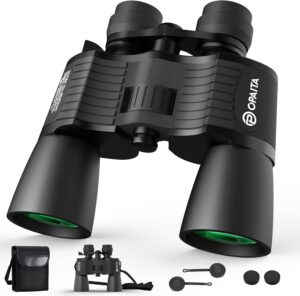
As one of the best zoom binoculars for cruise travel, the Opaita 12-36×52 Binoculars are designed for users who want flexible magnification and bright viewing performance in a compact, handheld optic.
With an adjustable 12x to 36x zoom range and large 52mm objective lenses, these binoculars are capable of delivering detailed views of distant subjects while still gathering plenty of light for clearer images. This makes versatile for cruise travel and other outdoor activities.
Optically, the multi-coated lenses help improve light transmission, contrast, and color clarity, allowing users to enjoy sharper images even in less-than-ideal lighting conditions.
4) Sogries 10-30×50 Zoom Binoculars – Best for Bird Watching
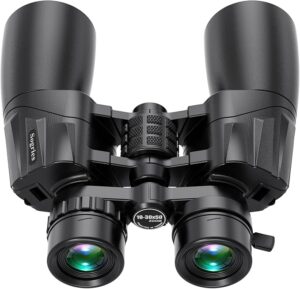
Next, we have the Sogries 10-30×50 Zoom Binoculars. This is a versatile pair of optics designed for users who want adjustable magnification for different outdoor viewing needs.
With a zoom range from 10× to 30× and 50 mm objective lenses, these binoculars aim to balance wide-field viewing with the ability to focus on distant details.
To complement the adjustable zoom, the optical system includes multi-coated lenses and BAK-4 prism elements that help improve light transmission, producing reasonably bright and clear images during daytime use. These features make them practical for birdwatching, wildlife spotting, sports viewing, and travel sightseeing.
Furthermore, the ergonomic rubber-armored exterior adds durability while providing a comfortable, non-slip grip during extended use.
In real-world performance, the adjustable zoom is convenient, but image stability becomes more challenging as magnification increases, especially at 30×, where hand movement can noticeably affect clarity. However, using a tripod or resting the binoculars on a stable surface helps maintain sharper viewing at high zoom levels.
Above all, the waterproof and fog-resistant construction allows reliable use in changing weather, while the adjustable eyecups improve comfort for both eyeglass wearers and non-wearers.
Pros
- Versatile use
- Multi-coated optics and BAK-4 prism design improve clarity and contrast
- Durable rubber-armored housing enhances grip and impact resistance
- Waterproof and fog-resistant build supports outdoor use
- Adjustable eyecups increase viewing comfort
- Good entry-level choice for hobbyists
Cons
-
Noticeable image shakiness at maximum zoom
5) MLight 10-30X50 Binoculars – Best Low Light Vision
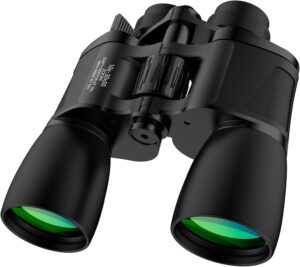
The MLight 10-30X50 Zoom Binoculars are versatile optics designed for beginners and casual outdoor enthusiasts seeking affordable zoom flexibility without investing in professional-grade optics.
With a zoom range of 10x to 30x and a 50mm objective lens, these binoculars offer flexibility for activities such as bird watching, wildlife observation, and outdoor sports viewing. At lower magnification, the field of view is reasonably wide and stable, making it easier to track moving subjects.
When zoomed in, the binoculars provide more detailed target observation, though image steadiness becomes more challenging at higher magnification without support. The build balances portability and performance, using lightweight materials that make carrying comfortable during extended outdoor use.
In terms of optical performance, these binoculars deliver acceptable brightness in good lighting conditions, thanks to the relatively large objective lens that helps gather more light.
To top it all off, the ergonomic design includes a textured grip for secure handling, and the focus knob is well positioned for convenient access.
Pros
- Bright and clear images even in low light conditions
- Sturdy and durable build
- Lightweight and portable design
- Easy-to-use focus mechanism
- Good entry-level choice for casual outdoor observation
Cons
-
Image sharpness reduces at maximum zoom
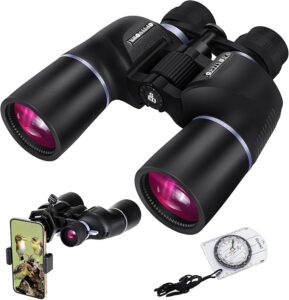
6) OPTIVORA 10-32×60 Zoom Binoculars – Best for Whale Watching
7) Pentax UP 8-16×21 – Best Compact
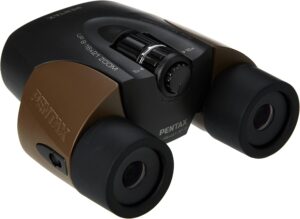
Last but not least, we have the Pentax UP 8-16×21. This is a compact, lightweight zoom binocular designed for users who want flexibility and portability in a single device.
Its 8–16x zoom range allows observers to switch from relatively wide viewing to closer magnified observation, making it suitable for casual birdwatching, hiking, sports viewing, and travel use.
Moreover, the 21 mm objective lens keeps the body small and easy to carry, though it naturally limits light gathering compared to larger binoculars. Image quality is generally sharp at lower magnification, with decent color reproduction and contrast in good lighting conditions.
As one of the best zoom binoculars, the build quality is solid with rubberized exterior protection that improves grip and helps resist minor impacts. Besides, the focusing system is straightforward to operate, and the lightweight design reduces hand fatigue during extended use.
Overall, this model is a practical choice for users who value convenience and variable zoom in a pocket-friendly form factor rather than professional-level optical performance.
Pros
- Portable and lightweight design ideal for travel and outdoor activities
- Versatile 8–16x zoom range for different viewing distances
- Good image clarity at lower magnification in bright lighting
- Rubberized exterior improves durability and handling
- Easy-to-use focusing mechanism
Cons
- The small 21 mm lens limits brightness in low-light conditions
Key Factors to Consider when Choosing the Best Zoom Binoculars
Whether you are buying your first pair of zoom binoculars or looking for an upgrade, here are the key factors to consider:
Magnification Power and Objective Lens Size
Firstly, the magnification level determines how close distant objects appear, while the objective lens size influences light intake and image brightness. For zoom binoculars, higher magnification may seem better, but excessive zoom can reduce stability and clarity. Many users prefer balanced ranges such as 8–24× or 10–30× because they provide versatility without sacrificing image sharpness.
Image Stability and Handshake Reduction
High zoom levels tend to amplify hand movements, which can blur the view. Look for binoculars with image stabilization or ergonomic grip designs that help reduce shaking. While some models rely on electronic stabilization, others depend on mechanical engineering to improve steadiness.
Lens Quality and Coating Technology
Next, the quality of the glass and lens coatings greatly affects brightness, contrast, and color accuracy. Fully multi-coated lenses usually provide better light transmission and reduce glare, especially in low-light environments such as dawn or dusk viewing. Premium optical manufacturers invest heavily in coating technologies to enhance viewing performance.
Field of View
Furthermore, it is important to consider field of view. This refers to the width of the area visible through binoculars at a specific distance. Higher magnification often reduces field of view, making it harder to track moving objects like birds or sports action. For wildlife observation or outdoor exploration, choose zoom binoculars that maintain a reasonable viewing width even at higher magnification settings.
Durability and Weather Resistance
Outdoor use requires binoculars that can withstand dust, moisture, and accidental impacts. Look for models with waterproof, fog-proof, and shock-resistant construction. The best zoom binoculars should also have a rubber armoring to enhance grip and protect internal components during field use.
Comfort, Weight, and Portability
Since zoom binoculars are used for extended periods, weight and ergonomics matter. Lightweight designs reduce arm fatigue and improve portability during travel or hiking. Moreover, compact models are especially useful for teenagers and casual outdoor enthusiasts.
Focus System and Ease of Adjustment
A smooth and responsive focus wheel helps users quickly lock onto subjects at different distances. Some advanced binoculars offer dual-focus or fast-focus mechanisms for convenience. Additionally, easy adjustment important when switching between zoom levels frequently.
Price and Value for Money
Lastly, the price of the best zoom binoculars should match optical performance, durability, and additional features. While high-end models offer superior clarity and construction, mid-range binoculars can also deliver excellent performance for casual or semi-professional use. Always compare specifications and user reviews before purchasing to ensure good value.
Read Also
Tips for Using Zoom Binoculars
1. Start with the lowest zoom setting to locate your subject quickly, then gradually increase magnification for detailed viewing. This helps maintain a wider field of view and reduces searching time.
2. Hold binoculars steadily using both hands and brace your elbows against your body or a solid surface when possible. Stability is especially important at high magnification levels.
3. Adjust focus slowly and carefully until the image becomes sharp and clear. Avoid making rapid adjustments as they make it harder to lock onto your target.
4. Use zoom moderately in low-light conditions because very high magnification reduces brightness and image contrast.
5. Track moving objects by moving your body, not just your wrists, to keep the view smoother and more stable.
6. Wear the neck strap while using binoculars outdoors to reduce the risk of dropping them during activities such as hiking or wildlife observation.
7. Avoid pointing binoculars directly at the sun, as intense light can damage optical components and may be harmful to your eyes.
Pros and Cons of Zoom Binoculars
-
Versatile Magnification. This allows you to adjust between different zoom levels, ideal for varying distances and viewing conditions.
-
Multipurpose Use. Great for bird watching, sports events, hiking, travel, and even stargazing when needed.
-
Space Saving. Combines multiple magnification options in one device, so you don’t need several fixed-power binoculars.
-
Improved Optics. High-end models often feature premium lens coatings and optical quality for bright, crisp images, even at higher zoom.
-
User-Friendly. The flexible zoom makes the binoculars suitable for beginners and casual users who aren’t sure what magnification they’ll need.
-
Advanced Features. Top brands include image stabilization, better focus systems, and weather-resistant bodies for enhanced outdoor use.
Cons:
-
Reduced Low-Light Performance. At the highest zoom settings, brightness and clarity can drop, especially in dim conditions.
-
Image Shake. The higher magnification makes hand movements more noticeable without image stabilization.
-
Narrower Field of View. As zoom increases, what you can see at once becomes smaller, making tracking moving subjects harder.
Best Zoom Binoculars Care and Maintenance Tips
Here are some tips to care and maintain your zoom binoculars:
-
Store binoculars in a protective case to shield them from dust, moisture, and accidental impact when not in use. Proper storage helps preserve optical alignment and mechanical zoom function.
-
Clean lenses using a microfiber cloth or a lens-cleaning kit. Avoid using rough materials or touching the glass surface with fingers, as oils and dirt can reduce image clarity.
-
Avoid exposure to extreme humidity and heat, which can damage internal components and fog the lenses. If binoculars get wet, wipe the exterior and let them dry naturally before storage.
-
Handle zoom mechanisms gently when adjusting magnification or focus. Forcing controls may cause internal wear over time.
-
Check and tighten straps and external fittings regularly to prevent accidental dropping during outdoor activities.
-
Keep binoculars away from sand and dust, especially during hiking, beach visits, or safari trips. Small particles can scratch lenses or affect zoom smoothness.
-
Use lens caps when binoculars are not in use to protect glass surfaces from scratches and debris.
-
Perform occasional professional servicing if you notice focusing difficulty, internal fogging, or uneven zoom movement.
FAQs
- Are zoom binoculars good for beginners?
Yes. Zoom binoculars are versatile and allow beginners to experiment with different magnification levels before settling on a preferred setting. However, beginners should prioritize easy focus adjustment and lightweight designs.
- Do higher magnification binoculars always mean better viewing?
No. Higher magnification can reduce brightness, narrow the field of view, and increase image shake. Moderate zoom levels usually provide clearer and more comfortable viewing for activities like bird watching, sports, or hiking.
- Are zoom binoculars suitable for bird watching?
Yes. However moderate zoom settings are recommended because birds often move quickly. Extremely high magnification can make it harder to track flying birds due to a narrowed field of view.
Parting Shots
Hopefully, you have found this buying guide insightful. Investing in quality zoom binoculars enhances outdoor experiences by delivering clearer, more detailed distant views. With multiple great models available today, prioritize optical quality, comfortable design, and reliable durability to get the best performance for your needs.