
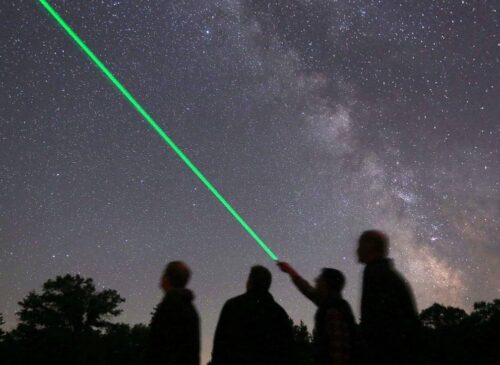
As the night sky has always inspired curiosity, exploring it fully demands precision. This is where the best astronomy laser pointer comes in.
A high-quality astronomy laser pointer will revolutionize your stargazing experience, allowing you to trace constellations, highlight planets, and guide others effortlessly across the vast darkness above. Whether you’re an amateur sky watcher or a seasoned astronomer, this buying guide will walk you through the top models available and help you find a laser pointer that doesn’t just point at the stars, but brings them closer to you.
What Makes a Laser Pointer Ideal for Astronomy
An ideal laser pointer for astronomical use features:
- High Visibility Beam (Preferably Green). Green lasers around 532nm are far more visible to the human eye at night, making them perfect for pointing out stars and constellations.
- Moderate Power Output (Typically 5mW or Less). Furthermore, a safe yet effective power level ensures the beam is visible without being dangerously strong or legally restricted in many regions.
- Long Beam Range. The pointer should project a clearly visible beam that appears to extend far into the night sky for accurate star pointing.
- Low Beam Divergence. Additionally, a tighter, more focused beam improves precision when identifying specific stars or celestial objects.
- Reliable Performance in Cold Weather. Astronomy often happens at night when temperatures drop. The laser should therefore function consistently in cooler conditions
- Sturdy and Durable Construction. A well-built housing helps the device withstand outdoor use and occasional drops.
- Good Battery Efficiency. Moreover, a long battery life is important for extended stargazing sessions without frequent replacements or recharging.
- Simple and Responsive Controls. Lastly, the best astronomy laser pointer should have easy-to-use buttons that allow quick activation without fumbling in the dark.
Best Astronomy Laser Pointers
1. LUEIIN Long Range Laser Pointer
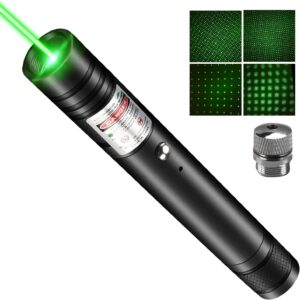
The LUEIIN Long Range Laser Pointer is the best astronomy laser pointer. It is designed with ease of use in mind for users who need strong visibility over extended distances.
The selling point of this toll is its powerful beam output. It remains visible even in low-light conditions and can reach impressive distances when used in clear environments.
Furthermore, the build quality is solid, featuring a durable metal casing that gives it a sturdy feel in hand while also helping with heat dissipation during prolonged use. The rechargeable battery system adds convenience, eliminating the need for constant replacements and making it more cost-effective over time.
In practical use, the LUEIIN laser pointer performs reliably, with a consistent beam and minimal flickering when properly charged. The focus adjustment feature allows users to switch between a concentrated beam for long-range pointing and a wider pattern for visual effects, which adds versatility.
However, due to its high output power, it requires careful handling and responsible use, especially in public or populated areas. Overall, it excels in outdoor environments, making it ideal for enthusiasts or professionals who specifically need long-range performance.
Pros
- Strong long-range beam visibility
- Durable metal construction
- Rechargeable battery for convenience
- Adjustable focus for versatile use
- Suitable for astronomy and outdoor applications
Cons
- Too powerful for indoor use
- Requires careful handling for safety
2. FUERKEEM Green High Power Laser Pointer
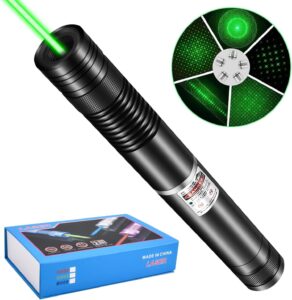
The FUERKEEM Green High Power Laser Pointer is designed for users seeking strong astronomy visibility and reliable long-range performance.
Its green beam stands out clearly even in low-light conditions. Furthermore, the build quality is solid, featuring a durable aluminum alloy body that resists minor drops and everyday wear.
Many users appreciate the adjustable focus, which allows you to switch between a tight, long-distance beam and a wider spread for closer use. Besides, the brightness is noticeably stronger than standard red lasers, giving it an edge when pointing at distant objects or highlighting details in large spaces.
In terms of usability, the FUERKEEM laser pointer is straightforward. With a simple push-button operation and rechargeable battery support, it adds convenience over disposable alternatives. Portability is another plus. It’s compact enough to carry in a pocket or bag without hassle.
Pros
- Bright green beam with excellent visibility over long distances
- Adjustable focus for both pinpoint and wide-beam use
- Durable metal construction for improved longevity
- Rechargeable battery support for cost efficiency
- Compact and portable design
- Suitable for astronomy, presentations, and outdoor use
Cons
- High power requires cautious and responsible handling
3. LETEAPII Green Light Flashlight
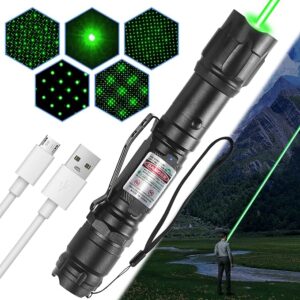
Next, we have the LETEAPII Green Light Flashlight. This flashlight is a purpose-built tool designed for users who need enhanced visibility in low-light environments without startling wildlife or straining their own vision.
Its most impressive feature is the green LED output. It offers excellent contrast and clarity at night compared to standard white light. This makes it especially useful for activities like hunting, tracking, or nighttime navigation.
Furthermore, the beam is focused and powerful, allowing for decent range while still maintaining a wide enough spread for situational awareness.
Moreover, the build quality is solid for long-term durability. The aluminum alloy body provides durability without adding unnecessary weight, and it usually comes with water-resistant properties for outdoor reliability.
What’s more, the LETEAPII Green Light Flashlight is straightforward and efficient to use. It includes simple controls for toggling brightness modes, making it easy to operate even with gloves. Additionally, the battery performance is respectable, offering extended runtime that supports long outings without frequent recharging or battery swaps.
Pros
- Green light improves night visibility without spooking wildlife
- Durable aluminum construction
- Water-resistant for outdoor use
- Long battery life for extended trips
- Lightweight and easy to carry
- Simple, user-friendly controls
- Good beam distance and focus
Cons
- Limited usefulness for general everyday lighting
4. Cinder Brands Power Pointer
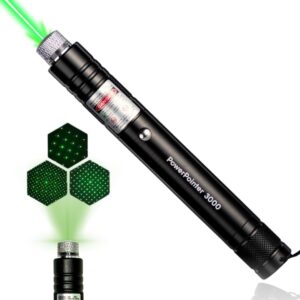
If you are looking for the best astronomy laser pointer as a professional, the Cinder Brands Power Pointer is a great option. It is designed with astronomy enthusiasts in mind, offering a strong, highly visible beam that makes it easy to trace constellations and point out celestial objects during night sky observations.
The build quality is solid, with a durable outer casing that withstands regular outdoor use. Furthermore, the laser output is bright enough to remain visible even in areas with moderate light pollution, which makes it especially useful for group stargazing sessions or educational demonstrations.
Moreover, the device is lightweight and ergonomically shaped, allowing for comfortable handling during extended use.
In terms of performance, the Power Pointer delivers consistent beam strength and reliable operation when used within recommended conditions. It also features simple controls, making it beginner-friendly while still appealing to experienced users.
Above all, its battery life is adequate for multiple observing sessions, though performance varies slightly in colder environments.
Pros
- Bright and clearly visible beam for night sky pointing
- Durable construction suitable for outdoor use
- Lightweight and easy to handle
- Simple, user-friendly operation
- Effective for group stargazing and teaching
Cons
- Performance and battery life drop in extreme cold temperatures
5. IVVTRYI Rechargeable Green Laser Pointer
6. FUERKEEM Rechargeable Green High Power Laser Pointer
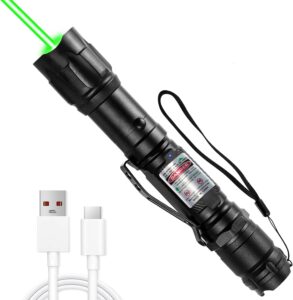
Coming in sixth is the FUERKEEM Rechargeable Green High Power Laser Pointer. This is a versatile and practical tool for users who need strong visibility and reliable performance.
Its green laser beam is significantly brighter than traditional red lasers, making it more effective for nighttime use, outdoor presentations, astronomy, and long-distance pointing.
Furthermore, the rechargeable design eliminates the need for constant battery replacements, which is both cost-effective and environmentally friendly.
Built with a durable aluminum alloy body, it is solid in hand and designed to withstand regular use. The device also includes adjustable focus, allowing you to switch between a concentrated beam for precision and a wider spread for broader coverage, which adds to its flexibility across different tasks.
7. Lennoos USB-C Rechargeable Green Laser Pointer
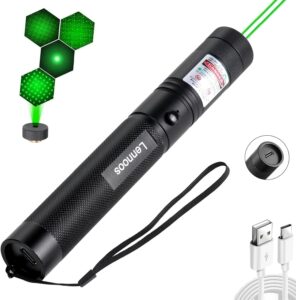
Lastly, we have the Lennoos USB-C Rechargeable Green Laser Pointer. This is a compact, modern upgrade to traditional laser pointers, designed for users who need strong visibility and convenient charging.
Its green beam is notably brighter and more visible than red lasers, especially in daylight or large indoor spaces. This makes it useful for presentations, teaching, stargazing, or outdoor pointing tasks.
Furthermore, the USB-C rechargeable feature eliminates the need for disposable batteries, offering faster charging and better long-term convenience.
Regarding portability and handling, its lightweight, pen-style design makes it easy to carry in a pocket or bag, while the metal body gives it a more durable, premium feel compared to cheaper plastic alternatives.
In actual use, the laser performs consistently with a stable beam and good range visibility, often extending far enough for outdoor pointing in low-light conditions. The single-button operation keeps it simple, and the rechargeable battery tends to last through multiple sessions depending on usage intensity.
Pros
- Bright green beam with high visibility indoors and outdoors
- USB-C rechargeable for fast and convenient charging
- Lightweight, portable pen-style design
- Durable metal build quality
- Simple one-button operation
- Good beam stability and range for presentations or pointing
Cons
- Limited advanced features like adjustable focus or modes
How to Choose the Best Astronomy Laser Pointers
Choosing the best astronomy laser pointer for requires careful attention to several important criteria to ensure that you select a reliable and practical option.
Laser Color and Visibility
Firstly, consider laser color and visibility. The most commonly recommended color for astronomy laser pointers is green because the human eye is most sensitive to green wavelengths, making it far more visible in the night sky compared to red or blue lasers. The best astronomy laser pointer should produce a bright, crisp beam that remains visible even under low-light conditions without requiring excessive power.
Power Output and Brightness Control
Laser power is measured in milliwatts (mW), and for astronomy use, moderate power levels are preferred, typically around 5mW for safety in public or educational settings. Higher-powered lasers may be visible over longer distances, but they must be used responsibly. Ideally, the device should also offer consistent brightness without flickering or overheating.
Safety Features
Next, safety is a critical consideration, especially when using lasers around groups of people or in public spaces. The best astronomy laser pointers include features like a key lock, pressure switch, or safety cap to prevent accidental activation. Compliance with laser safety standards is also important to minimize risks to eyes and aircraft visibility.
Beam Visibility and Focus Quality
Furthermore, the best astronomy laser pointer should produce a tight, well-defined beam that does not scatter excessively. Beam clarity ensures that you can accurately point out stars, planets, or constellations without confusion. Poor-quality lenses often result in a fuzzy or broken beam, which reduces precision during sky tours.
Build Quality and Durability
Since astronomy activities often take place outdoors, durability matters. A good laser pointer should be made of strong materials like aluminum alloy to withstand minor drops, moisture, and temperature changes. Weather resistance or at least splash-proof design is a helpful bonus for field use.
Battery Life and Power Source
Moreover, a long battery life is essential for uninterrupted stargazing sessions. The best astronomy laser pointer uses rechargeable lithium-ion batteries, which are more cost-effective and environmentally friendly. Efficient power consumption ensures the laser remains bright throughout extended night observations without frequent recharging or replacement.
Ease of Use and Ergonomics
Lastly, comfort and simplicity are important, especially during long astronomy sessions. A good laser pointer should have an ergonomic grip, intuitive controls, and lightweight design. Features like a simple on/off button or momentary switch help users quickly point at objects in the sky without distraction.
Read Also
Pros and Cons of Laser Pointers for Astronomy
Pros:
- Excellent sky visibility. Green laser beams are highly visible against the night sky, making it easy to point out stars, planets, and constellations.
- Improves learning experience. Laser pointers help beginners and groups quickly identify celestial objects during stargazing sessions.
- Portable and lightweight. The best astronomy laser pointers are easy to carry outdoors and convenient for field astronomy activities.
- Simple operation. Most models have straightforward controls, allowing quick and accurate pointing.
- Energy efficient (especially rechargeable models). They last for extended sessions without frequent battery changes.
- Useful for group guidance. They are also deal for astronomy educators or tour guides leading night sky observations.
Cons:
- Safety risks if misused. Improper handling can cause eye injury or distract pilots if pointed upward irresponsibly.
- Limited effectiveness in poor weather. Fog, rain, or high humidity reduces beam visibility.
- Regulatory restrictions. Some regions have strict rules on laser power and usage in public spaces.
Common Mistakes to Avoid
Avoid make these mistakes when buying an astronomy laser pointer:
1. Choosing the Wrong Color (Not Green). One of the most common mistakes is picking red, blue, or multi-color laser pointers. For astronomy, green is the most effective because the human eye sees it much more clearly in dark skies, making stars and constellations easier to point out.
2. Buying Excessively High Power Lasers. Many buyers assume higher power means better performance, but this is not true for astronomy. Ultra-high-powered lasers can be unsafe and unnecessary. Typically, moderate power levels are sufficient for visibility while keeping usage safer and more controlled.
3. Ignoring Safety Standards and Legal Limits. A major mistake is not checking whether the laser complies with local safety regulations. In many regions, only low-power lasers are allowed for handheld use. Ignoring these rules can lead to unsafe situations and legal issues.
4. Falling for Fake or Misleading Power Ratings. Some cheap laser pointers advertise unrealistic power levels or “long-range visibility” claims. These listings are often inaccurate and result in poor beam quality or unsafe devices that do not perform as expected.
5. Overlooking Beam Quality and Focus. A common oversight is focusing only on power instead of beam clarity. Poor-quality lasers produce scattered or fuzzy beams, making it harder to accurately point at celestial objects. A clean, tight beam is essential for astronomy use.
Maintenance and Care Tips
Proper maintenance of your astronomy laser pointer ensures consistent performance, longer lifespan, and safe operation during stargazing sessions. Since these devices are often used outdoors at night, follow these routine care and maintenance tips to keep them reliable.
1. Keep the Lens Clean. The lens is the most important part for beam clarity. Gently clean it using a soft microfiber cloth to remove dust, fingerprints, or smudges. Avoid using harsh chemicals, as they can damage the coating and reduce beam quality.
2. Store in a Dry, Safe Place
Moisture and humidity can damage internal components over time. Always store your laser pointer in a dry case or pouch when not in use. Avoid leaving it exposed to rain, dew, or damp environments after night observations.
3. Remove or Secure Batteries When Not in Use
If you won’t be using the laser for an extended period, remove the batteries to prevent leakage and corrosion. For rechargeable models, avoid overcharging and unplug once fully charged to preserve battery health.
4. Avoid Extreme Temperatures
Very hot or cold conditions can affect performance and battery life. Store and use the laser pointer within moderate temperature ranges to maintain stable operation and brightness.
5. Handle with Care During Use
Avoid dropping or knocking the device against hard surfaces. Even small impacts can misalign internal components or damage the beam focus, reducing accuracy during stargazing.
6. Check Functionality Regularly
Before each astronomy session, test the laser to ensure it powers on correctly and the beam is clear. Early detection of issues helps prevent interruptions during sky observations.
7. Use Responsibly to Prevent Overuse Wear
Continuous long-duration use causes overheating in some models. Use the laser in short bursts when pointing at objects rather than keeping it on continuously.
FAQs About Astronomy Laser Pointers
- What color laser pointer is best for astronomy?
Green laser pointers are the most preferred for astronomy because the human eye is highly sensitive to green light. This color makes stars and constellations easier to highlight even in dark skies.
- Can laser pointers be used in all weather conditions?
Most laser pointers work well in clear and dry conditions. However, fog, heavy rain, or extreme humidity can reduce beam visibility. Durable, weather-resistant models perform better outdoors.
- How far can an astronomy laser pointer reach?
It depends on power and atmospheric conditions. However, quality astronomy laser pointers are visible for several kilometers even though visibility is affected by air clarity and light pollution.
- Are laser pointers legal for astronomy use?
Yes. In many regions, low-power laser pointers are legal for educational and astronomy purposes. However, regulations vary, so it’s important to follow local laws and avoid misuse, especially near airports or public areas.
Final Thoughts
Choosing the right laser pointer for astronomy is ultimately about balancing performance with responsibility. A well-selected device should offer strong visibility in dark skies while still remaining safe for both the user and others. Look at key factors such as color, beam quality, durability, and power level to choose a model that helps you connect with and explore the night sky in a clear and engaging way.