
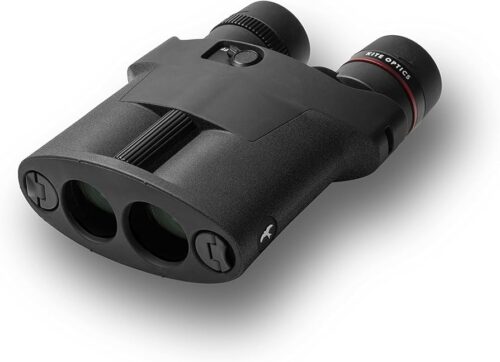
Wildlife viewing demands clarity, stability, and precision, especially when observing animals in motion or at long distances. Whether you’re tracking birds through dense forests, scanning open savannahs, or observing distant wildlife in low light, the best image stabilized binoculars for wildlife viewing feature advanced optics that help you stay locked on the moment with clarity and ease.
In this guide, we explore top-performing stabilized binoculars that combine optical precision, durability, and user-friendly performance for an immersive wildlife viewing experience.
What are Image Stabilized Binoculars?
Image stabilized binoculars are advanced optical devices designed to reduce or eliminate the shaking and vibration that naturally occurs when holding binoculars by hand. They use built-in electronic or mechanical stabilization systems, such as gyroscopic sensors or prism-shifting technology, to keep the viewed image steady, even when your hands or body are moving.
With image stabilization, users get to see distant objects more clearly and comfortably, especially at higher magnifications where even small movements can cause significant image blur. As a result, these binoculars are a practical choice for extended use in dynamic environments where quick movement and portability matter.
Why Image stabilized Binoculars for Wildlife Viewing?
The best image stabilized binoculars for wildlife viewing are useful for wildlife viewing in the following ways:
1.Reduced image shake for clearer viewing. Image stabilized binoculars minimize hand tremors and movement, helping you see wildlife more clearly even at long distances.
2. Improved tracking of moving animals. Stabilization makes it easier to follow birds in flight or animals moving through dense or uneven terrain.
3. Enhanced detail recognition. A steady image allows you to notice fine details like markings, behavior, and subtle movements in wildlife.
4. Minimal eye strain and fatigue. By keeping the view stable, they make long wildlife observation sessions more comfortable and less tiring.
5. Eliminates the need for a tripod. You enjoy stable, high-quality viewing while staying mobile and hands-free in the field.
6. Performs well in challenging environments. These binoculars are ideal for use in windy, uneven, or fast-changing outdoor conditions where stability is hard to maintain.
7. Improved overall viewing experience. Last but not least, image stabilized binoculars provide a smooth, more immersive way to observe nature without constant image shake distractions.
Best Image Stabilized Binoculars
1. SIG SAUER Zulu6 FDE HDX OIS 12X42mm – Best Overall
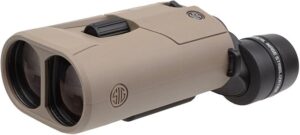
The SIG SAUER Zulu6 FDE HDX OIS 12x42mm is the best image stabilized binoculars for wildlife viewing.
As one of the most innovative handheld binoculars, it employs an Optical Image Stabilization (OIS) system. Instead of relying on a tripod, the built-in stabilization electronically cancels hand shake, delivering a surprisingly steady, high-magnification view even when scanning wide terrain.
The HDX glass further enhances brightness, contrast, and color accuracy, making it easier to pick out details in low light or at longer distances. Moreover, the 12x magnification is usable than traditional binoculars at the same power because the image remains locked in place, especially in Target Mode, where stabilization is noticeably stronger for identifying distant objects.
Construction-wise, the FDE finish, rugged housing, and IPX-rated weather resistance also make it a reliable companion for outdoor use in harsh environments.
In performance terms, the Zulu6 12x42mm delivers a spotting scope-like experience in a compact binocular form factor. This is thanks to the dual stabilization modes, Scan and Target, that allows users to switch between broader situational awareness and highly stabilized, detail-focused viewing.
Above all, the battery-powered operation is efficient enough for extended field sessions, and the ergonomics are well balanced despite the internal electronics.
Pros
- Exceptional image stabilization
- Sharp HDX glass with strong contrast and color fidelity
- Dual Scan and Target modes for versatile use
- Excellent for long-distance observation without a tripod
- Durable, weather-resistant construction
- Usable in low-light conditions compared to typical handheld high-power binoculars
Cons
- Higher price point compared to non-stabilized binoculars
2) Nikon STABILIZED 12×25 Binocular – Best Compact
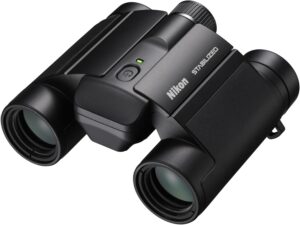
The Nikon STABILIZED 12×25 binocular is a compact, high-performance optic designed for users who need powerful magnification in a lightweight and highly portable form.
Its highlight is the built-in image stabilization. This stabilization system reduces hand shake at 12x magnification, allowing for a steadier and clearer viewing experience than most handheld binoculars in this class.
Despite its small 25mm objective lenses, it delivers surprisingly sharp detail and good color accuracy in daylight conditions, making it well-suited for birdwatching, travel, sporting events, and general outdoor observation. Furthermore, the compact folding design also makes it easy to slip into a small bag or even a large pocket, which adds to its appeal for users who prioritize mobility.
In the field, these binoculars are premium and thoughtfully engineered, especially when it comes to comfort and ease of operation. The stabilization system is intuitive to activate and makes a noticeable difference when tracking moving subjects or observing distant details for extended periods.
Pros
- Effective image stabilization reduces hand shake at high magnification
- Compact and lightweight design ideal for travel and outdoor use
- Sharp, clear images in daylight conditions
- Easy-to-use controls and ergonomic handling
- Premium build quality
Cons
- Requires battery power for stabilization feature
- Limited low-light performance due to small objective lenses
3) Kite Optics APC Stabilized 12×42 Binoculars – Best Versatile
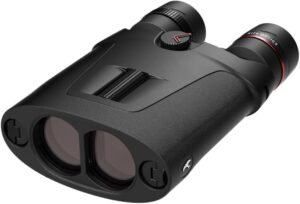
Made versatile for any outdoor adventure, the Kite Optics APC Stabilized 12×42 binoculars uncover details that are invisible to even high-end standard binoculars, transforming your experience into a vivid, film-like encounter with nature.
At 12x magnification, these binoculars deliver impressive reach for observing distant subjects, while the stabilization system significantly reduces hand shake, making it easier to maintain a steady, detailed view without the need for a tripod.
Furthermore, the 42mm objective lenses provide a bright, clear image with strong contrast, even in low-light environments such as early morning or late evening.
Regarding construction, the build quality is premium and rugged, with a weather-resistant housing. This makes is well-suited for birdwatching, wildlife observation, marine use, or long-range spotting in open terrain.
In real-world use, these binoculars stand out for their ability to keep the image remarkably steady compared to traditional high-magnification models. This makes extended viewing sessions far more comfortable, reducing eye strain and improving target tracking accuracy.
In addition to everything else, the optics are sharp across most of the field of view, with good color fidelity and minimal distortion toward the edges.
Pros
- Exceptional image stabilization for handheld use
- Sharp and detailed optics with strong contrast
- Good low-light performance for dawn and dusk viewing
- Durable, weather-resistant construction
- Reduces eye strain during long observation sessions
Cons
- Higher price compared to non-stabilized binoculars
- Heavier than typical 12×42 models
4) Canon 12×36 Image Stabilization III Binoculars – Best Rugged
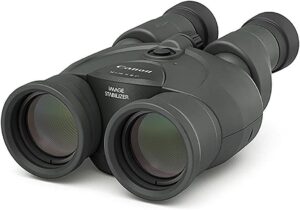
As one of the best image stabilized binoculars for wildlife viewing, the Canon 12×36 Image Stabilization III Binoculars deliver a premium viewing experience that stands out mainly because of their exceptional image stabilization technology.
Unlike conventional binoculars that can feel shaky at higher magnifications, these binoculars significantly reduce hand tremor, allowing for a remarkably steady and comfortable view even during extended observation sessions.
The 12x magnification brings distant subjects closer with impressive clarity, while the 36mm objective lenses strike a solid balance between portability and light-gathering ability.
Whether you’re watching wildlife, sports, or scanning landscapes, the optics produce sharp, bright, and well-contrasted images that feel natural and easy on the eyes.
Another notable feature is comfort and ease of handling. The ergonomic design and relatively lightweight build make these binoculars suitable for long periods of use without fatigue, while the image stabilization system helps maintain focus on moving subjects with minimal effort.
To top it all off, the optical performance remains consistent even in moderately low-light conditions, making them versatile for both daytime and late-afternoon viewing.
Pros
- Excellent image stabilization for shake-free viewing
- Sharp and clear optics with good color accuracy
- Comfortable and ergonomic design for extended use
- Lightweight compared to many stabilized binoculars
- Good performance in varied daylight conditions
Cons
- Requires batteries for stabilization feature
- Limited low-light performance
5) Fujinon Techno-Stabi TS-X 14×40 – Best for the Money
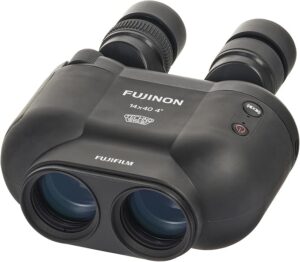
Lastly, we have the Fujinon Techno-Stabi TS-X 14×40 Image Stabilization Binocular. This is a high-performance optic designed for users who need extreme stability and clarity at long distances.
As one of the best image stabilized binoculars for wildlife viewing, they offer great operability due to the optimized positioning of diopter rings and On/Off switches for power and image stabilization.
Furthermore, the advanced image stabilization technology reduces hand shake, allowing users to maintain a steady view even at 14x magnification without relying on a tripod. This makes it especially useful for marine observation, long-range nature viewing, and situations where stable support is difficult to achieve.
Regarding optical performance, the optics deliver bright, crisp images with strong contrast, and the field of view remains impressively usable for a high-magnification stabilized binocular.
Moreover, the TS-X 14×40 are solid and purpose-built, with a rugged body that handles challenging outdoor conditions. The stabilization system is also highly responsive, engaging quickly to smooth out motion and keep subjects locked in view, even in moving environments like vehicles or windy landscapes.
Pros
- Excellent image stabilization that drastically reduces hand shake
- Very sharp and high-contrast image quality
- Strong performance in moving environments
- Solid, durable build quality for outdoor use
- Effective long-distance viewing without needing a tripod
Cons
- Relatively heavy compared to standard binoculars
- Sits at a high price point
Key Factors to Consider when Choosing the Best Image Stabilized Binoculars for Wildlife Viewing
When choosing the best image-stabilized binoculars for wildlife viewing, factor in these key features to find the right model for your needs.
Optical Clarity
For starters, consider optical clarity. High-quality lenses with excellent coatings help deliver sharp, bright, and color-accurate images, especially in low-light conditions such as dawn or dusk when wildlife is most active. A good optical system also reduces glare and enhances contrast, allowing you to spot fine details like feather patterns or animal movement from a distance.
Image Stabilization Performance
Next, image stabilization performance is a crucial consideration. Since wildlife observation often involves handheld use in uneven terrain, a strong stabilization system helps reduce shake and jitter for a steadier view. This makes it easier to track moving animals and maintain focus for longer periods without eye strain, especially at higher magnifications where even small movements can disrupt the image.
Magnification and Field of View
Magnification and field of view also play a major role in usability. While higher magnification brings distant subjects closer, it can narrow the field of view and make it harder to locate fast-moving animals. A balanced magnification level ensures you can both observe details and maintain situational awareness, which is essential when scanning forests, savannas, or open landscapes.
Weight
Weight and portability significantly affect comfort during long wildlife viewing sessions. The best image stabilized binoculars for wildlife viewing tend to be heavier than standard binoculars due to built-in electronics and stabilization components, so choosing a model with a manageable weight and ergonomic design helps reduce fatigue. A comfortable grip and balanced body design make it easier to carry and use for extended periods in the field.
Battery Life
Battery life is another important factor since image stabilization systems require power to function. Long-lasting batteries or easily replaceable power sources ensure uninterrupted viewing during long excursions. It is also helpful to choose binoculars with energy-efficient stabilization modes or auto shut-off features to conserve power when not in use.
Durability
Moreover, solid build quality and weather resistance are essential for outdoor wildlife environments. Binoculars that are waterproof, fog-proof, and shock-resistant withstand unpredictable weather conditions such as rain, humidity, and dust. Additionally, a rugged build ensures reliable performance whether you are in tropical forests, wetlands, or dry savannah regions.
Ergonomics
Ergonomics and ease of use also influence the overall experience. Smooth focusing mechanisms, well-placed controls, and intuitive stabilization activation allow for quick adjustments when tracking animals. Comfortable eye relief and adjustable eyecups further enhance usability, especially for extended viewing sessions or when wearing glasses.
Value for Money
Finally, price and value for money should be carefully evaluated. The best image stabilized binoculars for wildlife viewing vary widely in cost depending on brand, features, and optical quality. It is important to balance your budget with the features that matter most for your wildlife viewing needs, ensuring you get reliable performance without overspending on unnecessary extras.
Tips for Using Image Stabilized Binoculars
Follow these tips to use your image stabilized binoculars effectively:
- Hold the binoculars firmly with a steady grip, and support your elbows against your body or a stable surface to reduce movement
- Activate the image stabilization feature before focusing to ensure the system immediately reduces shake and delivers a clearer view
- Adjust the focus slowly and carefully to avoid missing or overshooting moving wildlife, especially at longer distances
- Use lower or moderate magnification when scanning wide areas, and switch to higher magnification only when needed for detail
- Minimize body movement by standing still, moving slowly, or using natural supports like trees, rocks, or vehicle frames
- Turn off image stabilization when not in use to conserve battery life, and carry spare batteries for longer outings
- Set eyecups and eye relief properly for comfort and a full field of view, especially if wearing glasses
- Clean lenses regularly with a microfiber cloth to maintain sharp, clear images and prevent dust or smudges from affecting visibility
- Practice smooth panning and tracking techniques to follow moving animals more easily and maximize stabilization performance
Read Also
- 10 Best Lightweight Binoculars for Bird Watching
- 7 Best Budget Binoculars for Astronomy
- 5 Best Thermal Binoculars
Pros and Cons of the Best Image Stabilized Binoculars for Wildlife Viewing
Pros:
- Clear and steady image. The stabilization technology reduces shake, allowing you to see animals and details more clearly.
- Less eye fatigue. A stable view helps reduce strain during long observation sessions in the field.
- Improved tracking. Moving wildlife is easier to follow without constant image shaking or blur.
- Effective high magnification use. The higher zoom levels become more practical since stabilization keeps the image steady.
- No tripod required. You can easily achieve stable viewing without carrying extra support equipment.
Cons:
- Higher price range. These binoculars are generally more expensive due to built-in stabilization systems.
- Increased weight. The added internal components make them heavier than standard models.
- Battery reliance. They need power to operate, so battery management is necessary during use.
FAQs
- Do image-stabilized binoculars perform well in low light?
Yes. Many models are designed with high-quality optics that enhance brightness and contrast in low-light conditions. This makes them effective during early morning or late evening wildlife activity.
- Can I use image-stabilized binoculars in bad weather?
Yes. Many models are designed to be waterproof and fog-proof, making them suitable for outdoor environments. However, it is important to check the weather resistance rating before use in heavy rain or extreme conditions.
- Are image-stabilized binoculars heavy to carry?
It depends. Most models tend to be heavier than standard binoculars due to the built-in stabilization components. However, the designs focus on improving ergonomics and balance to reduce fatigue during long use.
Conclusion
Hopefully, this buying guide has steered you in the right direction. With the right balance of optical quality, stabilization performance, durability, and comfort, image stabilized binoculars greatly improve outdoor observation and make every encounter with nature more engaging and memorable. Look at the features that make each model the right purchase and choose wisely.